
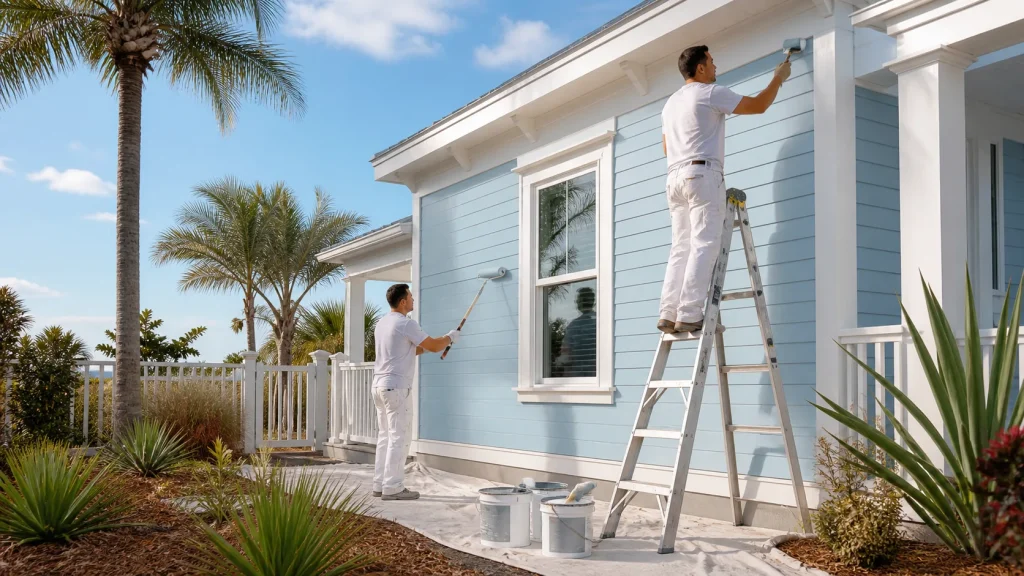
Florida’s sunny skies and warm weather might make it seem like any time is a good time to paint the outside of a house. But down here in Bradenton, FL, the weather shifts in ways that can surprise you. Humidity rises fast. Rains pop up in the afternoon. That mix of heat and moisture can make a big difference in how well paint sticks and how long it lasts.
Timing matters more here than it does in places with drier, milder seasons. Choosing the right time for exterior painting helps avoid damage from moisture, stops the paint from bubbling or drying too quickly, and keeps your home looking fresh longer. Planning around Florida’s seasons helps the job go smoother, with better results.
Why Weather Plays a Big Part in Painting Outside
In Florida, the weather works on its own schedule. Some months feel like summer never ends, and others surprise us with cooler breezes and clearer skies. That back-and-forth can be tough on any outdoor project, especially painting.
- Humid air makes surfaces damp, even when it hasn’t rained. That extra moisture can keep paint from sticking the right way.
- During the summer, afternoon thunderstorms are hard to avoid. It might start out sunny, but the weather flips fast.
- Paint needs dry, steady air to cure properly. If it dries too fast in the heat or stays wet too long from humidity, it won’t last as long.
We wait for stretches of dry days when the temperature stays warm but not too hot. That’s when paint goes on smooth and holds up to Florida’s tough weather.
But even the driest days can bring challenges. Sometimes, morning dew lingers on surfaces if the night was humid. Painters keep a close eye on these patterns, starting later in the morning once walls have fully dried. Waiting those extra few hours for the right conditions means the paint can stick properly and dry without streaks or bubbles.
Another thing to remember is that Florida’s breezes help speed up drying times, but strong winds can also blow dust and sand onto wet surfaces. This can cause rough patches that need sanding down once everything is dry. Planning for the right weather week helps avoid these headaches.
What Makes Fall the Best Choice in Florida
By the time fall rolls around, things start to feel a little steadier. The afternoon rains don’t hit quite as often, and the humidity finally starts to drop. These changes make a difference.
- Mid-to-late fall often brings the best painting weather for homes in Florida. Days stay warm, but not sweltering.
- Lower humidity means paint dries evenly and sticks properly to surfaces that may have soaked up moisture all summer.
- Planning ahead in September gives enough time to finish the job before evenings turn cooler and unpredictable weather returns.
Even though we don’t deal with snow or freezing temperatures like other states, fall still marks a noticeable shift. It’s a window of opportunity when the weather finally gives us a break long enough for outdoor work to be done right.
During fall, the sunlight is less harsh, which helps prevent paint from curing incorrectly or developing cracks and flakes over time. Homeowners who take advantage of this season often find that their paint jobs look brighter and stay looking fresh for a longer period. Since the days aren’t as hot, it is also a lot easier to work outside, which can help large projects get wrapped up quickly.
Making plans for your painting projects in the fall can also help you avoid clashing with the busy spring and summer schedules. There’s less pressure to fit the work in between storms or family vacations, and the post-summer humidity drop means you start with drier surfaces. By checking forecasts ahead and working with the steadier fall weather, you set yourself up for smooth results and fewer hiccups.
When to Avoid Exterior Painting and Why
Some times of year just bring extra risk when painting outside. The weather might be harsh, unpredictable, or not dry enough for paint to cure the way it should.
- Late spring and summer are trouble spots. Afternoon rains flood through quickly, soaking surfaces right after prep work.
- Paint applied when it’s too hot may dry before it has a chance to bond well, leaving a rough or chalky finish.
- Florida winters are mild, but a few colder nights can still slow paint drying times and cause problems with how evenly it applies.
Trying to squeeze in painting jobs during these seasons can lead to extra work later. The paint may not hold up as long, and touchups could come sooner than expected. Waiting for a better stretch of weather usually saves time and effort.
Summers in Florida really test the patience of painters. Even the most careful prep work can be undone by a pop-up storm that rolls in without warning. The high heat also makes working on ladders and under the sun uncomfortable and sometimes unsafe. Winter might be less severe, but occasional cold snaps can leave paint feeling sticky or tacky, making the whole project take longer than expected.
Besides temperature and rain, pollen levels can go up in spring, causing extra dust or grit to land on drying paint. This can create uneven textures that will need to be sanded or repainted. So, targeting the dry windows between summer storms and before winter cold gives paint the best chance to dry right and look great.
Other Things That Can Affect Timing
Even with the right season in mind, there are still a few extras to think about when planning the paint job on a Florida home. Where the house sits and how it’s built can shift the best timing by a few weeks.
- Homes near the coast, like in Bradenton or Venice, take more wear from salty air and ocean winds. These spots may need attention more often than inland homes.
- Trees, tall shrubs, or shaded porches can keep parts of a home from drying fully. These spots can stay damp longer, even when the rest of the house dries quickly.
- Older homes might have surface areas that need repair before painting. Planning around those fixes avoids delays once the project gets started.
Getting ahead of these small issues makes a big difference. It keeps the schedule tight and avoids surprises once it’s time to paint.
For houses close to the ocean, it’s a good idea to keep an eye on how salt and humidity build up. These can make surfaces rougher, which means more prep work is needed before painting even begins. Shady areas under big trees might not fully dry after a rainy night, so work in those spots often has to start later in the day. Planning for a few extra days makes it easier to avoid rushing the project.
If your house is on a busy street or near construction, try to choose days when less dust or debris is in the air. Open areas catch more wind, which can blow grass, dirt, or seeds onto wet paint. Checking your surroundings and the week’s forecast helps make smart adjustments for a clean finish.
Make the Most of the Season
JD Cleaning & Painting uses premium paints by Sherwin-Williams and Benjamin Moore, proven to last in Florida climates, and includes careful prep, repairs, and thorough surface cleaning before every exterior job. Fall gives us the best shot at a smooth, stress-free paint project. The weather holds steady, the rain slows down, and temperatures stay warm but manageable. For homeowners in places like Bradenton, FL, this season usually offers the most reliable window for outdoor work.
Timing matters more than most people expect. Getting it right helps paint look better, hold up longer, and go on without delays or do-overs. A well-timed project saves extra steps, avoids damage, and keeps your home in great shape, even through Florida’s mix of sun and storms.
Planning to have the outside of your house painted in Bradenton, FL can be a smart move in the fall, thanks to the ideal weather conditions that help produce quality and long-lasting results. Considering factors like steady weather, rain, salt air, and shade from trees makes a noticeable difference. At JD Cleaning & Painting, we recommend giving yourself extra time to plan and prepare for the best outcome. To get more details about the process or to know what to expect with exterior painting, let us help you choose the perfect time for your home.
